Imigração e Escolarização Brasil-Argentina: Linguagem, Cultura e Identidade (Escuta, 2025, org. Leda M. O. Rodrigues) · Book chapter · Portuguese
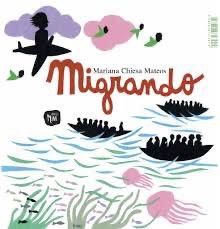
Book chapter analysing the book "Migrando", by Mariana Chiesa Mateos as case studies in reading mediation for multicultural education, examining how illustrations represent (or erase) racial and migrant identities, through the lens of Stuart Hall and Aníbal Quijano's coloniality of knowledge.
Avancini, B. R., Rodrigues, L. M. O., & Silva, A. P. F. (2024). "Migrando": literatura infantil como prática de uma pedagogia da alteridade. Ponto-e-Vírgula, 2(34).
Peer-reviewed article (with Leda Rodrigues and Ana Paula Ferreira da Silva) proposing a model for using children's literature — through Mariana Chiesa Mateos' picture book "Migrando" — to help children process migration, identity and otherness, drawing on Stuart Hall's work on representation.
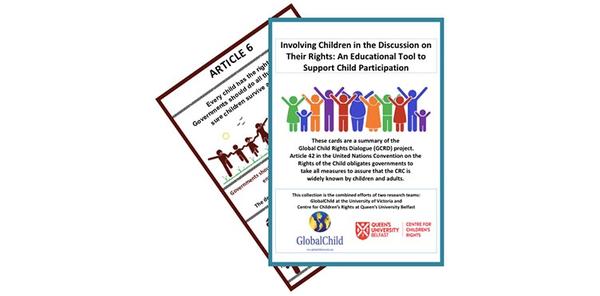
Educational tools and resources (Portuguese edition). Centre for Children’s Rights at Queen’s University Belfast.
Based on the attributes that the Indicators Development Team identified, and with input from a youth advisory group, it was created child-friendly articles to describe each of the rights under the Convention on the Rights of the Child, using easy-to-understand language.
Newspaper & Opinion Article

Estadão · Opinion · October 2025 · Portuguese "O adultocentrismo na discussão da adultização" (Bruna Avancini and Stefania Molina)
Written after Brazil passed Law 15.211/2025 — a child online-safety law prompted by a viral exposé on the "adultização" (sexualisation) of children on social media — this op-ed argues the law is necessary but insufficient. Co-written with Stefania Molina, it contends that digital child protection still centres almost entirely on adult control and punishment, sidelining children themselves; drawing on the UN Convention on the Rights of the Child and Brazil's own child rights statute, it argues for digital literacy and complaint channels built in children's own language, backed by examples like Nepal's Child-Led Budget Advocacy.
Folha de S.Paulo · Opinion · June 2026 · Portuguese "Preserva-se a vida, abandona-se a criança" (Bruna Avancini and Stefania Molina)
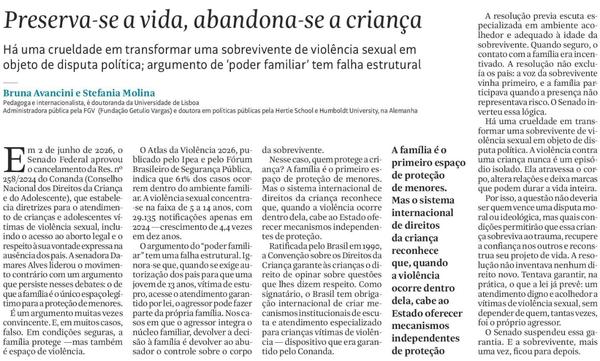
On June 2, 2026, Brazil's Senate revoked a Conanda resolution that guaranteed specialised, survivor-centred care for children who are victims of sexual violence — including access to legal abortion without parental authorisation when the abuser is a family member. Co-written with Stefania Molina, this op-ed argues that the repeal ignores a hard fact: most child sexual violence happens inside the family, and international children's rights law obliges the state to protect children independently precisely when that's where the harm comes from.